
Sensex Falls Over 800 Points — ₹7 Lakh Crore Vanishes: What Really Happened?
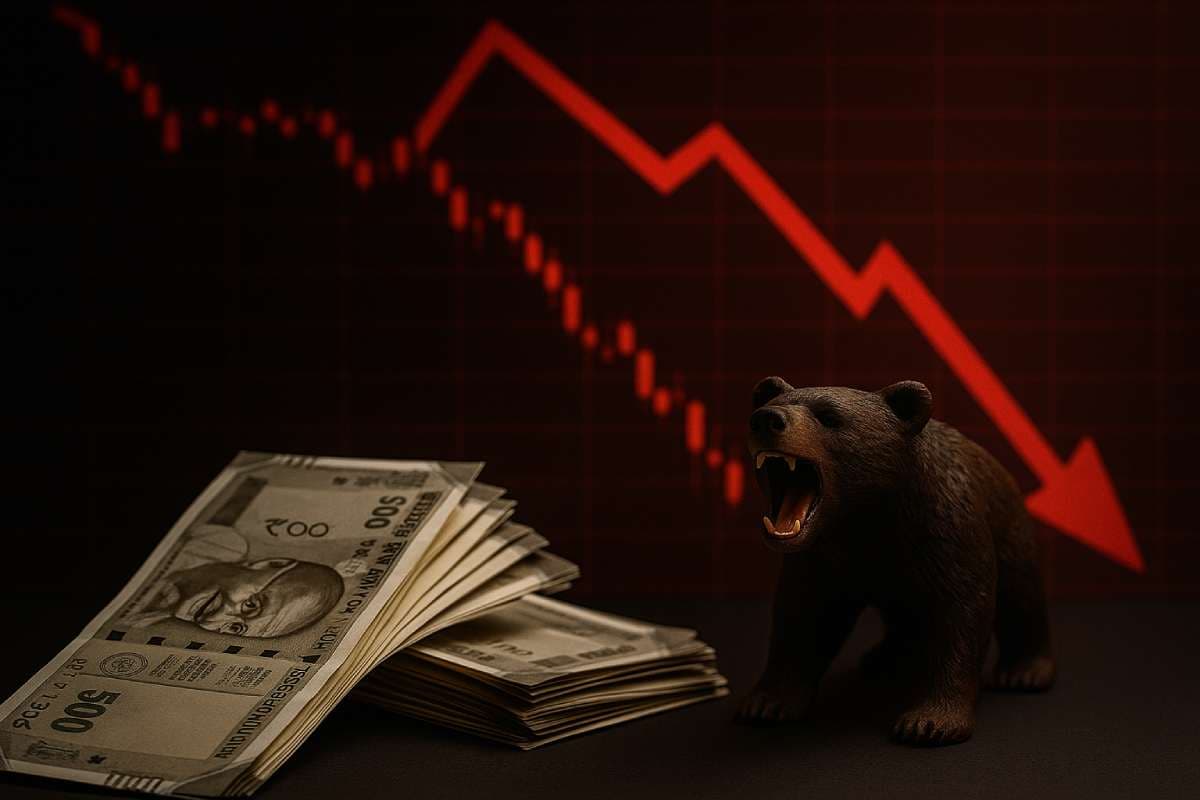
It was a tough and unsettling day for Indian stock market investors. There was panic in the market when it woke up for the morning trading session, and by the afternoon, the crashing of the Sensex took place by more than 800 points, while the Nifty 50 also dropped sharply. More than ₹7 lakh crore of market wealth vanished in just a few hours.
The dramatic drop was like a sudden shock for almost the entire spectrum of investors, from big institutions to common retail investors. However, what had brought about such a debacle? Why did the market abruptly lose trust? And what does it imply for the coming days?
We will analyse and explain everything in simple terms.
What Triggered the Big Market Fall?
A stock market crash is always a consequence of some underlying factors. In this case, several points have come together to create a perfect storm. These were the major reasons behind the fall of the steep:
1. Heavy Selling by Foreign Investors (FIIs)
Foreign Institutional Investors (FIIs) are the major force behind India’s stock market. When they invest, markets go up. When they sell, markets go down — most of the time, it is a steep decline.
As a matter of fact, FIIs have been liquidating their positions in India amid global uncertainty. In the first week of December alone, they were said to have pulled out more than ₹11,000 crores from Indian equities.
The abrupt withdrawal of foreign capital has made large-cap shares the target of inflows, leading to market-wide liquidation and a loss of confidence.
2. Weak Global Cues
The world economy has been quite unstable. Worries about interest rate reductions, currency fluctuations, conflicts, and the global decline in stock markets rattled investors’ nerves.
Emerging markets such as India are normally affected by global market disturbances.
3. Profit Booking After a Strong Rally
The Indian stock market has been vibrant over the last few months. Both Sensex and Nifty have reached new levels. But after such rallies, investors usually decide to take their money off the table — especially if the overall mood is weak.
Profit-taking on a large scale was the main reason for the drop, which was deepened by the day's trading.
4. Negative Sentiment in Key Sectors
Most of the sectors that led the market to a fall are the same ones where the selling pressure was put to show: IT, banking, auto, energy, metals, and even FMCG. The overall index thus experiences a very steep decline when multiple sectors fall simultaneously.
Big-cap stocks, which are the main source of index change, have been brought down considerably.
A Quick Look at the Damage
Here is a snapshot showing how severe the fall was:
|
Market Indicator |
Impact |
|
Sensex Fall |
Over 800 points |
|
Investor Wealth Lost |
Around ₹7,00,000 crore |
|
Nifty 50 |
Fell sharply, slipping below key support levels |
|
FIIs Withdrawal (Early December) |
More than ₹11,000 crore |
|
Sectors Affected |
IT, Banking, Auto, Metals, Realty, FMCG — almost all major sectors |
|
Market Sentiment |
Highly negative, panic-driven selling |
The table clearly demonstrates that the fall was not just a handful of stocks that were affected — the whole market was impacted.
Why This Fall Matters?
Though markets go through their ups and downs regularly, a drop of this size usually has a lot more to say underneath its downtrend.
1. It Can Affect Investor Confidence
Such quick falls in value make people afraid. Many investors (particularly new ones) will likely not decide to inject more capital into the market. As a result, market liquidity will decrease.
2. FIIs Selling Can Continue
If foreign investors keep pushing their selling, the market will face more difficult days ahead in the next sessions. Their conduct changes with global factors, so the trend is mostly dependent on international markets.
3. Volatility May Increase
Volatility refers to rapid price changes. Such a situation is dangerous for short-term traders and can confuse beginners.
4. Impact on Long-Term Wealth Creation
Whenever large-cap stocks are on the decline, retirement funds, SIP returns, and long-term portfolios will also go down temporarily. Although long-term investors are generally not affected, there is still some short-term loss visible.
Why Did FIIs Start Selling So Aggressively?
Foreign investors are not those who do so impulsively. Here are some possible explanations:
1. Uncertain global economic outlook
Fear of global growth and inflation contributed to a general feeling of uneasiness.
2. Rising attractiveness of US markets
For instance, if US markets appear to be more stable or offer higher returns, foreign institutional investors (FIIs) will move their funds there.
3. Currency weakness
When the Indian rupee weakens, FIIs are the ones who lose on currency conversion — hence, they trigger the selling pressure.
4. Caution ahead of major policy decisions
Next economic announcements, Fed decisions, or government policies that bring investors' caution.
Who Were Hit the Hardest?
Though the entire market was under pressure, certain groups felt the impact of the market slump more deeply:
1. Retail Investors
Individual investors experienced a significant decrease in their investment portfolios. Many of them reacted in panic, selling their holdings out of fear.
2. Over-Leveraged Traders
Those who traded with borrowed funds faced margin calls, which forced them to close their positions.
3. New Investors
Newbies who invested during the recent market peaks suffered losses right away.
4. Mutual fund investors
Even though SIPs are still gradually stabilising things, short-term NAVs have been adversely affected.
Is This a Crash or Just a Correction?
Market drops are not always crashes. Some of them are normal corrections that keep markets from going too far in one direction.
Indicators of this being a correction:
a. Markets had gone up for many weeks
b. The prices of large-cap and mid-cap stocks were very high
c. Investors were anticipating a pause in the trend
Still, the quickness of the decline and the large amount of the lost money make it a scary situation as if it were more than a mere correction.
What Should Investors Do Now?
Here is the most important part — how to act wisely during such times.
1. Don’t Panic-Sell
A whole lot of investors panic when there is a dip and therefore sell at the worst time. Throw out the emotional decision-making from your life.
2. Revisit Your Portfolio
You should check whether your investments are sufficiently diversified, not only across different sectors but also across asset classes.
3. Continue SIPs
To a market dip, it's rupee-cost averaging, which is why SIP investments are. They benefit from such a situation.
4. Avoid Heavy Buying Immediately
It is better to wait until the market returns to a normal level before making large purchases.
5. Keep Cash Ready
Price corrections are what usually bring forth the opportunities to buy good companies at cheap prices.
Final Thoughts: Storms Don't Last Forever
The drop of more than 800 points and a loss of ₹7 lakh crore is really a heavy blow. However, stock markets are always subject to volatility. They go up, they come down, and they go up again.
This quite dramatic drop is still not the end of the way. It serves as a warning that:
a. Markets operate in cycles
b. Different kinds of investments are necessary
c. Thinking long-term is better than losing control in the short-term
d. Revisions offer openings
For calm and patient investors, this phase will eventually pass — and the market may recover stronger than before.
Reference: